
Choose countertops that complement your cabinets.
A thoughtful pairing, in your own light.
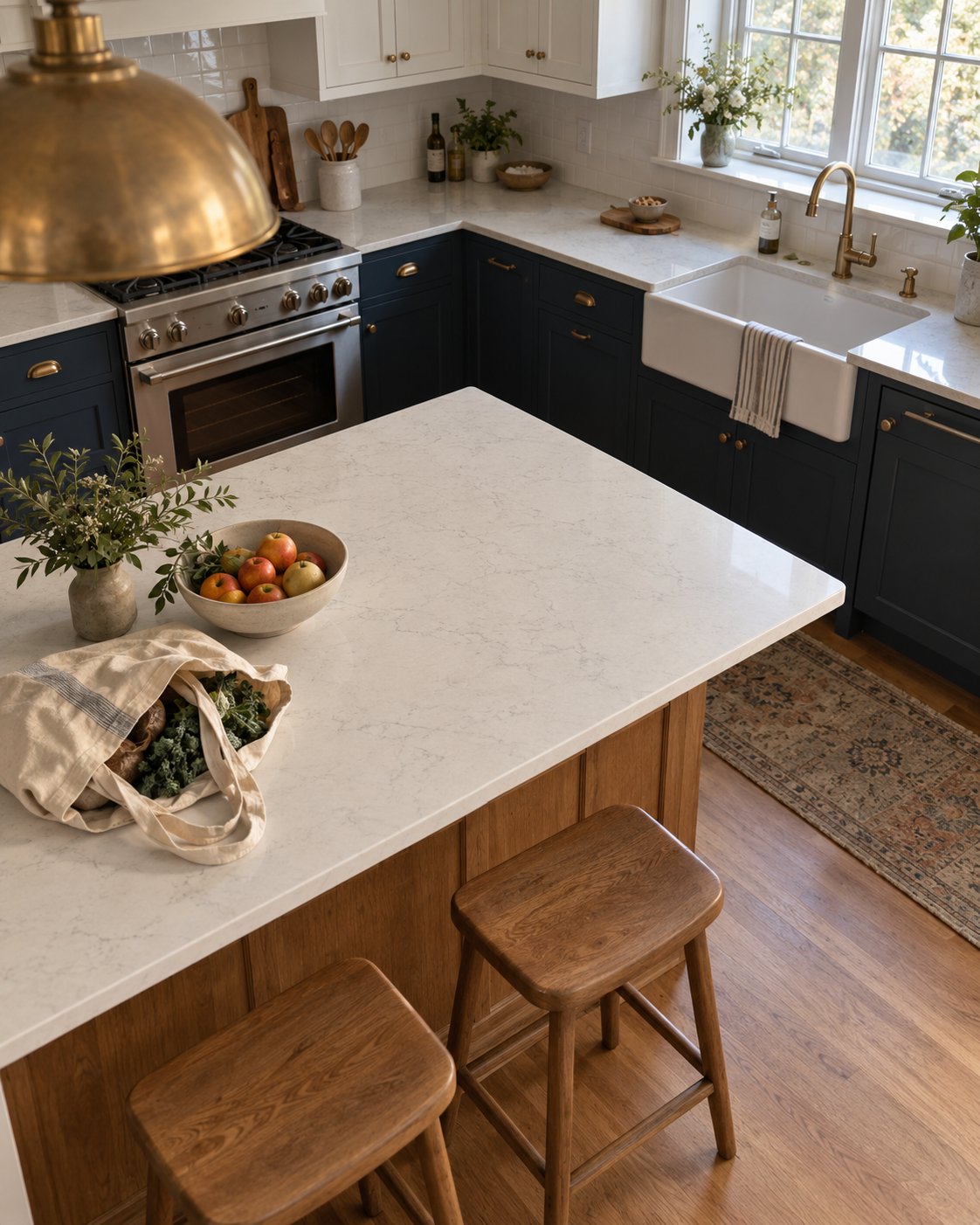
Start with the cabinets, then look at the light, the floor and the room as a whole. The right countertop pairing is the one you enjoy in your kitchen—not just in a bright showroom photograph.
Countertop design, fabrication & installation.
Coordinate cabinet installation or refacing with your cabinet provider.
Choose the relationship, not just the color.
Decide whether you want a quiet blend or a deliberate contrast. Then compare the surface’s background tone and pattern with the cabinet finish. A small sample helps with color; a larger slab view helps you understand movement across an island or long run.
Undertone
Compare warm cream, neutral white and cooler gray beside the actual cabinet finish. Look in daylight and under the lighting you use at night.
Pattern scale
Cabinet grain, floor pattern and veining all compete for attention. Decide which element should be the focus, then give the others room to be quieter.
Material & finish
A color match is only part of the choice. Confirm the exact product, finish and care guidance, including heat protection and any sealing requirements.
Explore our service areas to find the local countertop planning page for your city.
Four cabinet directions. One considered choice.
White cabinets
Compare undertones first. A subtle near-match can feel quiet; a darker surface creates a clear outline.
Oak & white oak
Let the actual wood finish guide the comparison. Test gentle pattern against visible grain.
Gray cabinets
Look for warm or cool undertones in both finishes. The floor and light can change their relationship.
Dark cabinets
Try a light surface for contrast or a tonal pairing for continuity. Check the effect in lower evening light.
Illustrative color blocks only. They are not product samples or accurate material representations.
Five parts of a useful estimate.
Confirm inclusions and responsibilities in writing. A material price on its own does not define the installed project.
Surface & finish
Specify the actual material and finish after reviewing a sample, not a color name alone.
Edges & contrast
Consider how the edge looks against doors and drawers, especially with a strong light/dark contrast.
Pattern & seams
Review larger pattern views and discuss layout before assuming a small sample represents the whole surface.
Sink & backsplash
Bring the sink finish and backsplash choice into the comparison so the countertop does not have to solve every contrast.
Budget & availability
Compare a complete project estimate. Confirm product availability and scope rather than inferring a price from appearance.
Three steps toward your new surface.
- 01
Gather the finishes
Bring a cabinet sample or clear photos, plus flooring and backsplash references if available.
- 02
Compare in context
Narrow the direction by undertone, contrast and pattern. Confirm appearance with physical samples.
- 03
Review the layout
Discuss where the pattern, seams, edges and fixtures meet before finalizing the selection.
Compare real finishes
Cambria illustrates several wood/white countertop pairings. Use the examples as design context, then compare your own samples. Explore manufacturer pairing guidance ↗
Manufacturer guidance provides general planning context. Confirm the requirements and responsibilities for your own project.
Matte, honed or polished: choose a finish for everyday life
A countertop finish affects more than the look of the room. Alongside the color and pattern, consider how you feel about the everyday marks and cleaning that come with the exact surface you’re choosing. A finish you enjoy living with is a better match than one you like only in a photograph.
Compare the look with the care instructions
You may prefer a softer-looking surface or a more reflective finish. Once a product catches your eye, check its full name, material and finish—not just the color name. The same general style description doesn’t establish that two products need the same care.
Caesarstone, for example, says its Natural, Honed, Concrete and Rough finishes require more cleaning than its Polished finish, and that fingerprints, metal marks and other signs of everyday use can be more visible. That guidance applies to the Caesarstone finishes it identifies; it isn’t a rule for every matte or honed countertop. Read Caesarstone’s finish-specific care guidance.
Think about what matters in your kitchen
If you want a softer appearance, you may be comfortable with the cleaning described for that particular finish. If visible handling marks would bother you, give that question as much attention as the color. The aim is to find a surface whose appearance and care expectations both suit you.
When comparing an actual sample or viewing a surface, look at it in the lighting you use in your kitchen. Then read the manufacturer’s care instructions for that exact product and finish. A sample helps you judge appearance; the written guidance helps you understand daily care.
Useful questions to bring to the comparison
Ask whether the finishes you’re comparing have different cleaning guidance, which everyday marks may be more noticeable, and what the manufacturer recommends for routine care. Check whether its advice about heat protection or cleaning products changes with the selected surface. You don’t need to become a stone-care expert to ask for a clear explanation.
Does a matte look mean every brand will behave the same way?
No. Treat the finish name as the start of the comparison. Check the selected brand, product and finish together, using that manufacturer’s current instructions. Advice for one named finish shouldn’t be carried over to a different product simply because the two look similar.
Bring the look you love and the questions you have
Tell us about your cabinet colors, the countertop look you’re drawn to, and what matters in everyday use. If you’ve saved a product name or care document, bring it into the conversation. That makes the discussion more useful than choosing from appearance alone.
Your countertop questions.
What countertop works with white cabinets?
Start by identifying whether the cabinet white is warm, neutral or cool. Compare a quiet near-match with a contrasting option in the room; there is no universal best pairing.
Should oak cabinets always have white countertops?
No. White can create contrast, but the wood’s finish and grain matter. Compare more than one tone rather than choosing from the cabinet species name alone.
Is white oak the same color in every kitchen?
No. Stain, finish, lighting and natural variation affect its appearance. Use your actual cabinet sample as the reference.
How can I avoid a gray kitchen feeling too cold?
Compare warmer and neutral surface undertones with the floor and lighting. A photo may hide subtle shifts, so sample the combination in the room.
Will a dark countertop make dark cabinets too heavy?
That depends on lighting, room size and the rest of the finishes. Compare a light contrasting surface and a quieter tonal scheme before deciding.
Can I choose a veined surface from a small sample?
Use the sample for tone and texture, then review larger product or slab views for pattern scale. Discuss how movement would read across the actual layout.
How should care affect my choice?
Compare the selected material’s current cleaning, heat-protection and sealing guidance before you decide. Confirm the exact product and finish rather than relying on color or the general material name.
Can Surface Systems replace my cabinets too?
This planning guide is about countertops. Coordinate cabinet sales, installation and refacing with the appropriate cabinet provider.